Somatic Therapy for Trauma
Working with the nervous system as well as the mind.
Somatic therapy for trauma works with the body as well as the mind, especially when the system has remained on alert long after something has happened.
People often come because something in them will not settle.
They may be getting on with life, working, caring for others, holding things together — and yet inside, the body stays tight or watchful.
You might notice that you can’t fully relax.
Sleep is light or broken.
You startle easily.
Or you feel oddly numb, disconnected, not quite in yourself.
It can be confusing, especially if you tell yourself you should be fine by now. But the body doesn’t move on just because time has passed. It holds what it has had to hold. And sometimes it simply hasn’t had the chance to stand down.
This is where we begin — gently, without forcing anything, and at a pace that your body can tolerate. In somatic therapy for trauma, the pace is central — the body needs time to recognise that it is no longer under the same pressure.
I don’t rush in.
I don’t go digging for detail before your body feels steady enough.
We start with what feels manageable.
That might be noticing where your breath sits, when your shoulders tense, or the moment your body braces without you realising.
I pay attention to what is happening now, in small, tolerable pieces.
Nothing is forced. Nothing is pushed past what feels safe enough.
As your body begins to register that it is not under threat in the same way, it can start to stand down. Not all at once. Gradually. Sometimes so gradually you only notice in hindsight — you slept more deeply, reacted less strongly, or felt a moment of ease you haven’t felt in a long time.
You remain in control of the pace.
The work is steady, careful and grounded.
Somatic therapy for trauma is part of the work on the retreats, woven quietly into the structure of the week rather than delivered as a separate technique.
It allows the body to begin to settle at its own pace, especially where it has stayed on alert long after something has happened. There is no pressure to push or revisit anything before there is enough steadiness. The work stays close to what is manageable, so that the system can begin to recognise it is no longer under the same demand.
You can read more about the structure of the retreats here:
https://healingtraumaretreat.com/trauma-retreat-italy/
This is the nature of the work — change that comes through the body settling, not through force.
BOOK A CALL
The first step is a conversation. I offer a complimentary 30-minute call — a space to speak openly about what you’re carrying, ask whatever you need to ask, and see whether this work feels right. Online or in person at San Flaviano.
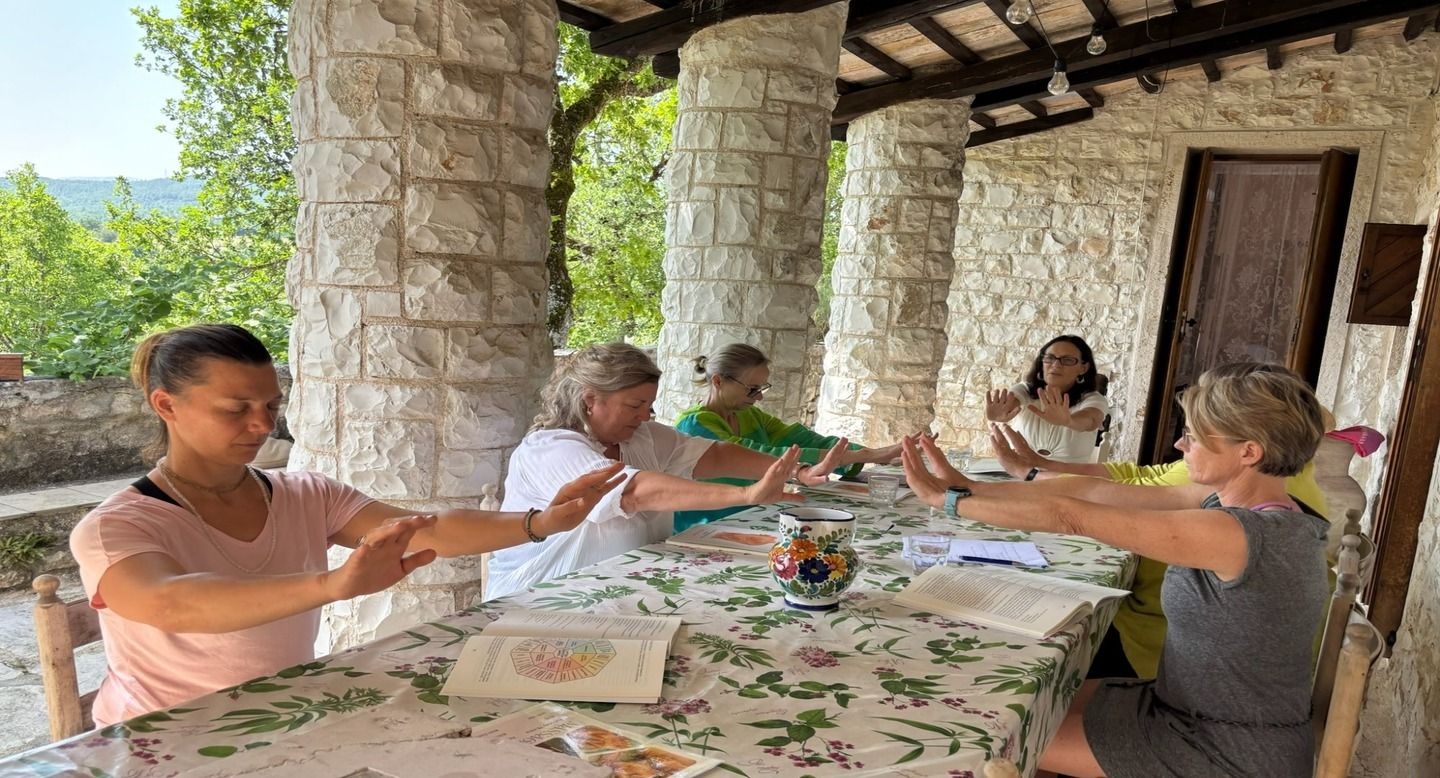
Tess teaching a workshop on somatic therapy for trauma at her retreat in Italy