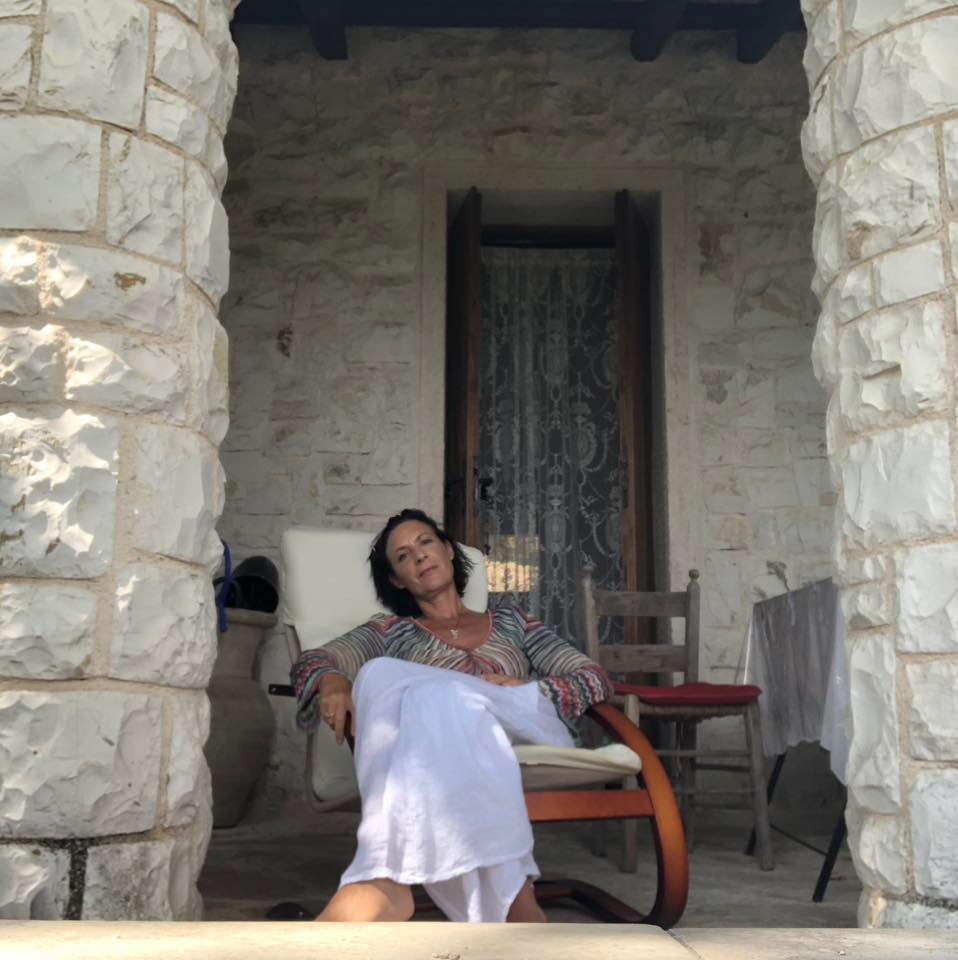
Tess Hunneybell
British Trauma Psychotherapist | Over 20 Years of Clinical Experience
I heard someone say recently that one of the biggest regrets people have towards the end of their lives is that they've spent so much time trying to live up to other people's expectations. And I thought, well, that's interesting, because I don't think anyone ever had any expectations of me. I certainly didn't have any of myself.
I grew up in Brixton, South London, one of seven children in an Irish immigrant family. I didn't have a plan for my life. Nobody told me what I should become, and I never had a particular idea of what I wanted to be. I just got on with things. And I think, in some strange way, not having a life mapped out for me meant I never felt particularly restricted by what I was supposed to do.
I've ended up living in different countries, building houses, running restaurants and nightclubs, becoming a foster mother to seven children in Mexico, creating a treehouse resort in the Caribbean, working with children in Senegal and restoring an ancient monastery in Italy. I've also built a home in Senegal, where I'm currently creating an organic kitchen garden. None of this was part of some grand plan. Things happened, people came into my life, and I made decisions about what mattered and what I could do. I've never felt the need to follow a conventional path, but I've always taken my responsibilities seriously, particularly when other people are depending on me.
But if there's one thing that has been constant throughout my life, it's my fascination with people. I absolutely love people. I'm fascinated by how we think, how we behave, what makes us laugh, what frightens us, what we believe about ourselves and how differently we all experience the world. And I love seeing people for who they are. Not just their problems or the things they've been through, but all the wonderful, funny, intelligent, complicated, sparkling things that make them who they are.
I think being truly seen by another person is one of the most important experiences we can have, particularly when we're children. Sometimes all it takes is one person who notices something about us, who recognises a quality or an ability that we haven't yet recognised in ourselves. Even one sentence can stay with someone for the rest of their life.
My interest in the human mind became much more personal in my early thirties, when my brother developed schizophrenia and psychosis. I knew very little about serious mental illness at the time, and watching someone I loved experience such profound psychological suffering left me with an enormous number of questions. Twelve years later, I lost him to suicide. Those experiences have stayed with me and were part of what eventually led me to study the human mind and specialise in trauma psychotherapy.
I've now spent more than twenty years working with people affected by trauma, and one of the things that continues to fascinate me is how much we can understand about ourselves without necessarily being able to change how we feel. We can know exactly why we respond to certain situations, why particular relationships are difficult or why something that happened years ago still affects us, and yet find ourselves having the same reactions again and again. Understanding is important, of course, but understanding alone doesn't always bring resolution.
That's really what my work is about. I don't believe people need to spend years repeatedly telling their stories or reliving painful experiences to recover from trauma. I work with the whole person, using psychotherapy alongside somatic approaches and other trauma-informed methods, always respecting their boundaries, choices and individual pace. And after all these years, I still think the relationship between therapist and client is one of the most important parts of the work.
I've learned an enormous amount through my professional training, but I've learned just as much from the people I've met and the experiences I've had along the way. Some of those experiences were wonderful, some were heartbreaking, and quite a few were things I could never have imagined getting involved in.
Before I tell you about my qualifications and professional work, I'd like to tell you a little about the life that brought me here.
I Came to This Work the Long Way Round
I was thirty-nine when I left the UK and moved to a little beach town on the coast of Oaxaca, Mexico, where I opened a small café and posada called Casablanca. There were rooms to rent and a café-restaurant downstairs, and I was beginning a completely different life. But alongside the excitement of moving to Mexico, I was also going through something very personal. I was coming to terms with the fact that I couldn't have children. I'd wanted to be a mother desperately, and at that point in my life I was finally allowing myself to grieve the children I would never have. It's a strange thing to explain, missing children who were never born, but I did miss them, terribly. And I still do. I'm sixty-four now, nearly sixty-five, and that sense of loss has never entirely left me.
Next door to Casablanca lived a wonderful gang of children, seven of them, from a blended family. The youngest was only four and the eldest was about sixteen or seventeen. Very soon after I arrived, their mother died, leaving their father struggling to cope with the loss of his wife and the responsibility of bringing up seven children. I attended the funeral, and afterwards, while we were still standing in the graveyard, their father came over to me. He was clearly overwhelmed by everything that had happened, and he simply said, "I can't do this. They need a mother."
And that was how I became their madrina, their godmother. I hadn't gone to Mexico looking for a family. In fact, I was there trying to make sense of the grief of not having one of my own. Yet here I was, living next door to seven children who had just lost their mother, with a father who was asking me to help him raise them. I couldn't possibly have imagined any of it when I first arrived in Oaxaca.
Those children became an enormous part of my life. Our relationship has continued over the years, long after I left Mexico, and today I have the wonderful pleasure of being a foster grandmother to fourteen children. Family, I've discovered, doesn't always arrive in the way we expect it to, and the relationships we build can continue across countries, continents and decades.

Casablanca, Oaxaca, Mexico — my youngest foster son, aged four.
Dominica — Building Treehouses and Understanding People
I've spent much of my life building things. Houses, businesses, communities and relationships. One of my more ambitious projects was designing and building Manicou River Resort, a treehouse eco-resort on the Caribbean island of Dominica, at the mouth of a volcano. I built it without an architect or engineer, drawing on years of experience in hospitality and a determination to create somewhere quite extraordinary.
While I was building and running the resort, I was invited to volunteer at CALLS — the Centre where Adolescents Learn to Love and Serve. It was a second-chance education programme for young people aged sixteen to twenty-two who had fallen out of mainstream education. I'd spent years working in hospitality around the world, so I taught what I knew. I developed a course in restaurant service, bartending and front-of-house hospitality, giving them practical skills that could help them find work in hotels, restaurants, on cruise ships or private yachts.
There were about fifty young people, twenty-five in each class, and I absolutely loved working with them. I loved their humour, their intelligence, their curiosity. I respected them enormously. I enjoyed their company, and I learned as much from them as I hope they learned from me.
I was born in Brixton, South London, into an Irish immigrant family, and grew up in a predominantly Caribbean community. The language, the humour, the music and the culture were part of my childhood. There was also poverty, racism, violence and a great deal of suffering. I grew up around it, but I didn't really understand it. I was a child. It was simply the world I knew. It wasn't until many years later, sitting in those classrooms in Dominica, that I began to understand more of what I'd witnessed growing up.
What troubled me wasn't who these young people were. I thought they were wonderful. It was what they had come to believe about themselves. I don't belong. I'm not worthy. I'm a mistake. These were deeply held beliefs about who they were, what they deserved and what was possible for them.
I wanted to challenge those beliefs, so I developed a one-day workshop called How to Be Happy. It wasn't about positive thinking or telling anyone to be grateful. We explored psychology, science and the extraordinary business of being human. I took them back billions of years, through the formation of stars, the creation of the elements that make up our bodies, the emergence of life on Earth and the evolution of the human brain. And then I asked them, "How can you possibly be a mistake?" After billions of years of evolution, after everything that has happened to bring you into existence, how can you believe that somehow you are an error?
We talked about how we come to believe things about ourselves, often without ever questioning whether they're true, and how the circumstances of our lives can influence our sense of worth. At the end of the first workshop, one of the teachers said, "Oh, I feel so light. I feel so light." And one of the young people replied, "It's because you is light, sir. It's because you is light." I've never forgotten that moment.
But my time at CALLS also made me realise something. Education matters. Opportunity matters. Being encouraged, respected and believed in matters enormously. But many of these young people had experienced considerable adversity, and I was beginning to recognise the effects of post-traumatic stress and complex trauma. Teaching them new skills, helping them find work or even challenging their beliefs wasn't necessarily going to resolve what they were carrying. They needed access to proper therapeutic support.
Although I'd been interested in mental health for many years, working with these young people in Dominica helped me understand where I wanted to focus my professional studies. I wanted to understand trauma. Why experiences from years, sometimes decades, earlier could continue to influence how we think, feel, relate to others and experience ourselves. And, most importantly, what actually helps?
I continued my studies and specialised in trauma psychotherapy. More than twenty years later, I still remember those young people at CALLS with enormous affection and respect. I wanted them to have the opportunities they deserved, and to recognise the qualities in themselves that I could see so clearly.

Teaching my How to Be Happy workshop at CALLS in Dominica, exploring self-worth, the human mind and how the beliefs we develop about ourselves shape our lives.

One of the treehouses I designed and built at Manicou River Resort, Dominica,
in the Caribbean — without an architect or engineer.
Senegal — The Children Who Changed My Plans
I first became involved with the Talibé children in Senegal shortly before the COVID pandemic. I was sitting in a little beach café when several boys came over and asked if they could have my sandwich. It was a simple encounter, but it was the beginning of a relationship with children whose lives I knew very little about at the time.
The Talibés are boys sent to traditional Quranic boarding schools, known as daaras, often by families who hope they will receive a religious education. But many of these children live in extremely difficult circumstances. Some are forced to spend long hours begging on the streets, bringing back money or food to their teachers. Many experience hunger, inadequate shelter, poor sanitation, untreated illness and, in some cases, violence and exploitation.
I began spending time with the boys, getting to know them and trying to understand their lives. What struck me was how young so many of them were, and how much responsibility they were expected to carry. They were children, often far from their families, trying to survive circumstances that no child should have to manage alone.
As my involvement grew, I began helping with food, clothing, medical and dental care, and emotional support. During the COVID pandemic, when so many people lost their income and access to food became even more difficult, I helped run a free food café. What had begun with a few boys asking for a sandwich developed into a much larger commitment, and I established Every Kid Counts – Senegal to continue that work.
Working with children who have experienced deprivation, separation and trauma requires more than providing material support, although food, safety and healthcare are essential. It also means recognising them as individuals, listening to them, treating them with dignity and understanding the effects of the lives they have been living.
My years in Senegal have given me a much deeper understanding of the relationship between trauma, poverty, childhood development and the importance of human connection. They have also reminded me that, whatever our professional knowledge or experience, we have to begin by listening to the people whose lives we are trying to understand.

England — Making Space for Grief
In May 2022, I was commissioned by the Rothschild Foundation to develop and lead a project working with Ukrainian women and children who had recently arrived in the UK after fleeing the war.
I'd planned workshops and individual trauma therapy for the women, but I didn't yet know what else they might need. And then, the night before I left Senegal for England, something happened that changed my thinking.
I was upset about leaving my husband, my home and the people I loved. I had a little cry, just a little boohoo, but everyone around me became concerned and tried to stop me crying. I remember sitting on the bed thinking, Where can I go to cry?
Eventually, I went outside on my own, where I could simply feel my sadness without worrying about anyone else's reaction.
And that's when I realised what was missing from the project. These Ukrainian families had lost so much, and they were trying to find their feet in a strange country while worrying about loved ones back home. They needed somewhere they could grieve, remember and express what they were feeling.
So alongside the workshops and therapy, we began creating a Grief Garden together. We made little hearts with blue and yellow ribbons, where people could write what they were grieving and tie them to the garden fence. The families brought their own ideas, memories and contributions, and gradually the garden became theirs.
By the end of August, around Ukrainian Independence Day, something extraordinary had happened. Families who had arrived frightened, overwhelmed and uncertain about their futures had organised a wonderful celebration and memorial ceremony. Lord Jacob Rothschild joined us, and the day was filled with music, laughter, pride in Ukraine and deep, meaningful grief.
What stayed with me was seeing joy and grief existing so naturally together. Nobody's losses had disappeared, and the future was still uncertain. But people had created a place where they could remember what they'd lost, celebrate what they loved and feel whatever they needed to feel.
Sometimes people don't need us to stop their tears. They just need somewhere they can cry.

Opening the Grief Garden with Lord Jacob Rothschild and Ukrainian families in August 2022. A memorial space we created together, where grief, remembrance and the celebration of Ukrainian independence could exist side by side.
Italy — Discovering What We're Capable Of
In 2013, I bought an ancient monastery in the mountains of Umbria, Italy. It was in a terrible state. Parts of the roof were missing, and restoring it was going to be an enormous undertaking. But I thought it was absolutely wonderful.
I had never restored a monastery before. I certainly didn't know everything involved in bringing an ancient building back to life. But I've never believed that not knowing how to do something necessarily means you can't do it. You can ask questions, find people who know more than you do, research, learn and work things out as you go along.
The restoration took eighteen months, and there was an extraordinary amount to learn. I wanted to preserve the history and character of the building while making it somewhere comfortable to live. There were problems to solve, decisions to make and plenty of things I had never encountered before.
I think we often surprise ourselves with what we're capable of. We can spend years believing certain things are beyond us, when sometimes the only thing separating us from doing them is a willingness to begin and the curiosity to find out how.
I didn't know how to restore a monastery when I started. But I was willing to learn. And I did.
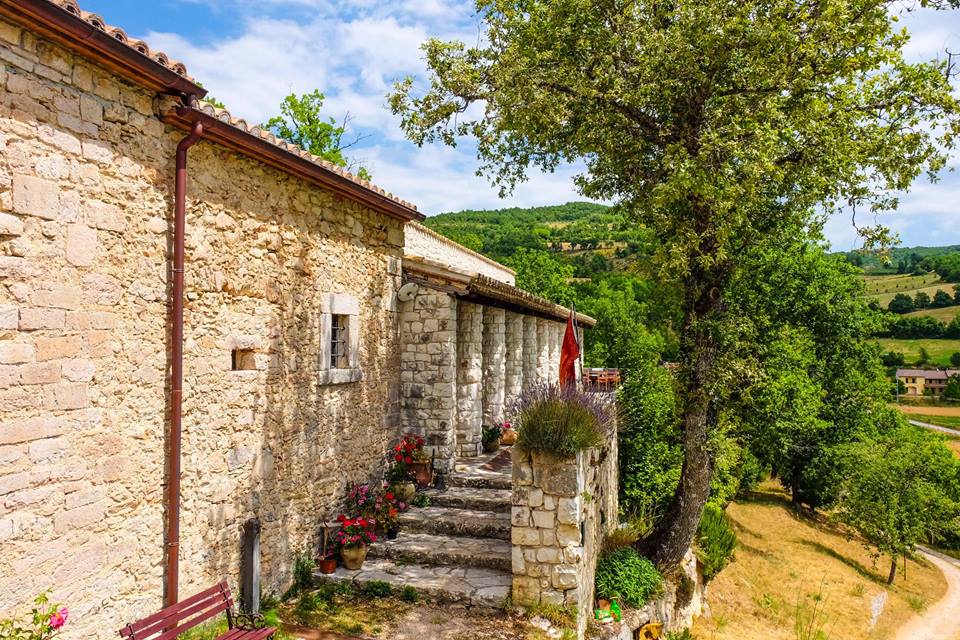
Trauma psychotherapist Tess Hunneybell at her private monastery in Umbria, Italy.
The Work I Do Today
These days, my work takes several different forms. I run small, women-only trauma recovery retreats, work individually with clients online, and lead one-day and weekend workshops. I also continue to volunteer with people who might otherwise struggle to access psychological support, including undocumented migrants and people seeking asylum in the UK.
My retreats bring together individual psychotherapy, somatic work, mindfulness and time to simply be. They're deliberately small, with no more than five women, because I want to know the people I'm working with, not just the difficulties they've come to address. There's no group trauma sharing, no pressure to tell painful stories, and no expectation that everyone will recover in the same way.
My online work allows me to continue working with people wherever they live, while the workshops give me the opportunity to explore the human mind with larger groups. I particularly enjoy those moments when someone suddenly sees something about themselves differently, perhaps something they've believed for years without ever questioning it.
The voluntary work matters enormously to me too. I've met people whose circumstances have left them with very little security, support or opportunity to be heard. Whatever someone's legal status, background or life experience, they're still a human being who deserves to be treated with dignity and respect.
After more than twenty years as a psychotherapist, I'm still learning. Every person brings something different to the work, and I never assume that what helped one person will necessarily help another.
I enjoy what I do enormously, and I certainly have no intention of stopping just yet.

Somatic trauma therapy workshop given by Tess during women’s trauma retreat.
Qualifications & Professional Training
Tess Hunneybell is a trauma psychotherapist with extensive professional training in psychotherapy, trauma treatment and complementary therapeutic approaches.
"At the heart of everything I do is a simple belief: healing can't be forced or rushed. It needs safety, time and someone willing to pay attention. When those things are present, change becomes possible."
— Tess Hunneybell
Additional professional training is available on request.
Shall We Have a Conversation?
If you've read this far, thank you for taking the time to get to know me a little. If you're curious about working together, I'd be very happy to meet you. We can have a conversation, you can ask me anything you'd like, and we can see whether what I offer feels right for you.
Book a Free 30-Minute ConversationNo obligation. Just an opportunity to talk.